 IT has fundamentally altered our work and life and improved our productivity, economy, and social well-being. An increased awareness of the harmful effects of greenhouse gas (GHG) emissions, new stringent environmental legislation, concerns about electronic waste disposal practices, and corporate image concerns are pushing businesses and individuals to Go Green. Going forward, IT now has a new role to play—helping to create a greener, more sustainable environment while offering economic benefits. Green IT is the study and practice of designing, manufacturing, and using computers, servers, monitors, printers, storage devices, and networking and communications systems efficiently and effectively with minimal impact on the environment. Green IT is also about the application of IT to create energy-efficient, environmentally sustainable business processes and practices. IT can support, assist, and leverage other environmental initiatives and help in creating green awareness. IT contributes to only about 2 to 3 percent of GHG emissions. The vast majority of emissions come from non-IT sources. So, broader applications of IT in other areas of the economy could bring significant energy savings and improve overall environmental sustainability.
Green IT will be a top priority for several years to come, as it is both an economic and environmental imperative. Several case studies on greening efforts reveal that businesses that reduce their environmental (carbon) footprint can also reduce costs and improve their public image. IT professionals, CIOs, and IT support staff are thus being called upon to deliver environmentally sustainable IT solutions. Even simple steps that one individual or organization take can make a huge difference when leveraged across the vast number of individuals and organizations across the world.
Green IT and Impacts on Value Chain: Green initiatives provide opportunities for return on investment, according to experts the business intelligence can help achieve sustainability and protect the environment by various methods:
To achieve the common goal of right product, right location, right time, manufacturers and retailers need to understand consumer demand and preferences in a given region. Business Intelligence through IT provides manufacturers with the capability to analyse vast amounts of information gathered from shipment data, retailers’ point of sale data and syndicated sources, to optimise operations. Using the right quantity of raw materials, labour, equipment and energy will reduce waste and eliminate the need to store items for long periods. Reducing energy consumption means lower costs and smaller carbon footprint, and in turn, a portion of these cost savings will pass down the value chain, increasing value to retailers and consumers.
Distribution centres receive goods in breakbulk from hundreds of manufacturers around the world. Warehouses break bulk and ship the right consolidated quantities to stores. Certain best practices within the hub and spoke distribution system can significantly cut lead times and transportation costs while reducing carbon footprint through lower fuel consumption. For example, cross-docking enables retailers to optimise redistribution of goods received from manufacturers to stores by packing, labelling and shipping products in a manner that shipments can be easily sorted and consolidated at the distribution centre for forwarding to stores. Inventory management is perhaps the most important step where Business Intelligence can improve efficiency. Excess inventory leads to waste (especially in the case of perishable products), affecting both the environment and margins. Most progressive retailers have implemented IT inventory systems similar to the installation of RFID to keep track of what is on the shelf, and advanced replenishment systems to forecast demand and generate orders based on past trends and current factors. Accurate inventory visibility in store is a key input for upstream operations such as manufacturing and distribution, to reduce waste, cost and carbon footprint.
However, there’s a disparity in the level of green IT understanding across companies, professionals, students, and users. Many don’t know how or where to begin or are unwilling to implement Green IT. Although green initiatives are catching the attention of the corporate world, some professionals, executives, and departments feel excessively burdened with the Green Philosophy. However, upon closer examination, they’ll find that going green is a sound strategy.
 Jairam K R, Director CSS India deserves to be called, a marathon man. His recent participation in the Hiranandani Thane Half Marathon (HTHM) is a clear cut example of how a man could inspire his team into adopting a healthy culture of fitness and strengthen the team spirit within the organization. Jairam and his team of 20 from CSS Mumbai participated the HTHM on the 16th February 2014.
 C
C
 The little faces were all lit up when they got new bags and umbrellas on the very first day of this school year at the
  Kavassery Desam is one of the socio-cultural organizations in UAE. It is unique in its nature due the representation of all the Kavasserians from Palakkad district in Kerala. The family consists of over 300 members who are promoting cultural and social welfare activities across the UAE. As part of the 12th anniversary celebration they organized a get together for the members at the Royal Palace Hotel Apartments. The evening showcased several activities where the member’s family as well their children performed in various cultural aspects. As per Mr. Rakesh Menon, Senior Manager, CSS Logistics, “It was a proud moment for CSS Logistics as sponsors because we were able to be part of this auspicious occasion and network with the member’s.”
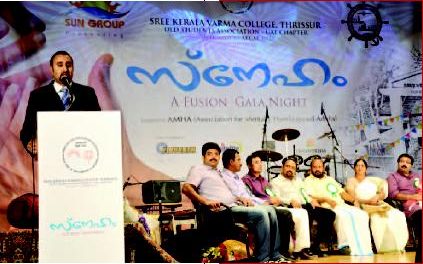 CSS has always been sensitive to social issues right from its inception. The Group actively demonstrates its involvement by supporting social issues on a regular basis. AMHA is the recent event that CSS Group sponsored as a part of its CSR program. Hosted by the “Sree Kerala Varma College Old Students Association” (SKVCOSA), the charity project AMHA (Association of Mentally Handicapped Adults) was initiated by Dr. P.Bhanumathi to create a loving and caring home for mentally handicapped adults in South India. AMHA aims to provide a home to adults with special needs, where they can live a comfortable life; it also provides counseling for parents and conducts medical inspections to support mentally handicapped adults.