Mood Music
 Multitude types of sound – office chatter, crowds cheering, car horns blaring, babies crying, dogs barking, birds singing and waves breaking on the shore, all affect us in different ways. Often we fail to recognise their impact as we relegate them to the backdrop hubbub of what we are doing. However all these sounds influence us, and the way we feel within our environment, especially when we are unable to control them.
Sounds have long been thought to influence human emotions and the significance of music has raised considerable interest amongst researchers. Understanding music-induced emotions, and its capability of influencing our moods, has gained greater importance. Music has been a part of our inheritance over many years. Classical music has an unbroken living tradition which goes back over a thousand years. Music played an important role in William Shakespeare’s plays. In ‘Twelfth Night’, written in 1602, Duke Orinso considers his infatuation with music might cure his obsession with love. He compares how eating too much food quells one’s appetite by musing;
‘If music be the food of love, play on’.
Whilst Shakespeare recognised music as feeding the emotions, scientific study of this phenomena have been rare until relatively recently. There is now significant interest amongst the science and medical professions. Businesses that also need to make a connection with their customers, in order to make their product attractive, now focus on the impact music makes.
So how and why does music affect us?
The initial impact is the beat. This fundamental driving component actually causes our hearts to start to beat in synch with the rhythm. This happens as the music starts to encroach into our personal environment. With background music it is an almost stealth-like. If we are immersing ourselves in the sounds the effect is more immediate. A slow beat causes our heart to slow and, depending on the ‘key’ of the song, it may either convey love or sadness. The ‘key’ is just as important as the beat because the choice of ‘key’ influences the feel a tune. A ‘major key’ tune will usually feel cheerful and convey an upbeat message to our brains but a ‘minor key’ will cause sadness. Equally a fast moving tune, depending on the key, can make us feel excited and full of joy or frightened.
Why does this happen?
When we listen to music our brains produce the chemicals serotonin and dopamine. It’s their combination that influences our emotions. This is why music may make us feel sad, hyped-up, tranquil or angry. Indeed the wide-ranging scope of music may end up blending our emotions in many ways.
Once we realise this connection we can choose the music to reflect our mood.
Indeed it seems that we have a habit of choosing the music based on the moods we are already feeling. We do this deliberately for specific or special occasions. Religious and political gatherings, weddings and funerals, anniversaries and parties, all immediately bring our own favourite music to mind. However if we want to change a negative current mood, choosing music that is more upbeat will lift us out of depression. It therefore becomes important not to choose music which encourages our depression. This link also explains why those dancing at raves become higher and higher. The participants are continually lifted upwards, as the beats and rhythms are constantly boosted.
Music communicates through beat and melody. It is therefore a universal means of communication. This is why we can travel the world and find enjoyment experiencing the musical feeling of another culture. A country’s culture influences their basic formation of music. The most obvious example of this is a comparison Western pop music and Indian Bollywood style tunes. The only really recent cross-over tune was from the film ‘Slumdog Millionaire’ with ‘Jai Ho’ (You Are My Destiny). However the Internet is causing the different styles of music to become integrated. Even the ethics that move composers and musicians are becoming similar as these quotes show:-
‘One good thing about music is when it hits you, you feel no pain’ – Bob Marley
‘I love appreciating all kinds of music’ – Taylor Swift
‘Music is about transporting people, speaking a language which languages fail to express’ – A. R. Rahman.
Music development and its ability to impact on moods relies on new talent so it was interesting to find this quote:-
‘I bridge the gap between music and life and now my heartbeat swings as sweet as a melody’ – Aloysha Peter.
Now in his twenties, his quote shows empathy with other musicians.
Experiences in our own lives invariably influence our future and Aloysha’s first musical adventures started when singing in a Trivandrum church choir – Kerala. His latest song, which he composed, arranged and produced, is called: ‘Lahari Ee Lahari’ – appropriate English translation – ‘Deliriously Happy’. It features Aju Varghese, a popular actor and comedian and Shann Rahman a music composer and singer. Both are well known for their work in Malayalam cinema. Its enthusiastic fun beat and melody has an infectious feeling which demonstrates how music can uplift our moods. Sometimes just being told about a piece of music may alter our mood. If you hear an artiste’s name it may conjure-up a tune in your mind and suddenly your mood is altered. So choose your music to create, enhance or change your mood because hopefully it may make you deliriously happy. The choice is yours.
 If you think that presentation is all about how others see you, then perhaps it’s time you reassessed your opinion. You may well ask, “Why” because surely the importance of how others receive your presentation is paramount? Well this was undoubtedly the case before the advent of the internet.
 A friend recently commented on how everyone seems to focus on finding out reasons as to why we do things. When, in response, I mentioned ‘Behavioural Economics’ his eyes started to glaze over; rising towards the ceiling. “Not another trend?” he asked. So tried to explain why I felt that this particular approach deserved fuller consideration.
 We all know that whether our office is lively, dull or easy-going we have days when things just do not seem to go right. At such times our stress levels rise and as a consequence our work suffers. Let’s face it we would all appreciate a less stressful day at the office. On such occasions an extra bit of ‘umph’ to jolly us along, would be very welcome. It’s therefore of little wonder that lots of ongoing research takes place to see how this ‘umph’ may be provided. So here are three suggestions, from many, that are designed to stimulate ideas which may enhance a work place environment.
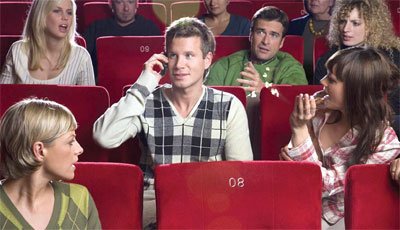 You’ve probably experienced it whilst shopping, the intrusive discourteous behaviour of some mobile phone users. They stroll along the aisles, looking at what to buy, whilst at the same time talking loudly into their mobile. They have an attitude that speaking on their mobile gives them some right to ignore other shoppers, allowing them to push past everyone regardless. They also force a way along pavements apparently believing that, clamping a phone to their ear, gives them some absolute right of way. Even worse they speak into an invisible aura, using Bluetooth, to connect to a hidden device. Some users even seek to increase their importance by juggling several mobiles. “Hey look how important I am, I have all these people wanting to speak to me – NOW!” Do they realise how idiotic the look?
 Think about the choice and volume of your ringtone – your upbeat all dancing tune says more about you than you realise.
 Carry on mobile conversations or check your phone constantly when you are supposed to be giving your full attention to others. Such actions are dismissive and ignorant.
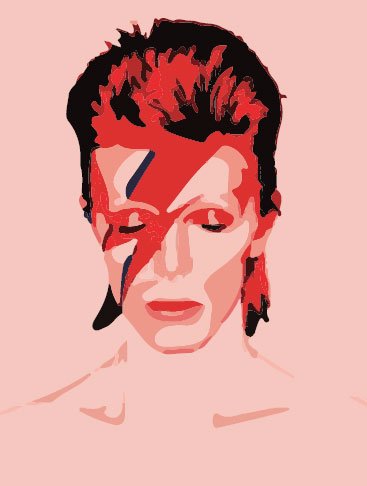 Being brought-up in England, as a youngster in the 60’s, meant one thing to an impressionable youngster and that was seeing David Bowie performing ‘Space Oddity’ on BBC TV Top Of The Pops programme. Bowie’s appearance seemed as far out as it was possible to be. Back then there was no way to record television so you could watch it later. Any one appearing had to make an immediate and lasting impact. Bowie’s first TV performance is still vividly lodged in viewers’ minds. This underscores his ability to command a following of fans, throughout a 60 year career, that may be credited to two main characteristics.
 Many years have passed since football legend Pele visited Kolkata and a lot has changed since then. A few weeks ago, when he was greeted by fans at Atletico de Kolkata’s ISL fixture against Kerala Blasters at the Vivekananada Yuva Bharati Krirangan Stadium in Salt Lake, Kolkata; one thing other than football was also uppermost in fans’ minds – get a selfie with Pele. This thought is so far removed from Pele’s first visit, thirty-seven years ago; no one would have predicted that the word “selfie” would have gained so much prominence. But fans, who managed to take selfies with Pele, soon started posting pictures of their memorable moment on social media. Twitter, Facebook and Instagram were soon full of selfies with Pele.
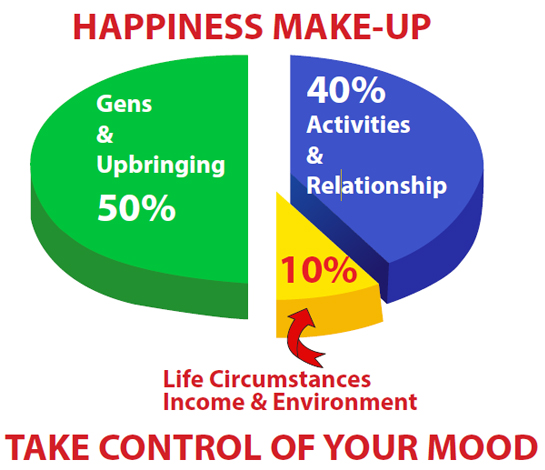 Have you ever wondered why some people nearly always seem upbeat and motivated, whereas others feel stuck in a rut? Even when the troubles of life hit them, there are those who just seem to carry on and bounce back. Well if you do find yourself wondering, you may take comfort from the fact that you are not alone. Set-backs are all part of life and it is how we deal with them that limits our ability to be happy.
  Invariably many things, in our day to day lives, change in a way that we just do not seem to notice. It was not that long ago that, in many countries, the small corner shop ruled. It not only provided personal service, it was also the centre of local gossip and news. The compulsive attraction of the shopping experience seems to rob most customers of good sense and reason. Impulse buying, influenced by the way store displays are arranged, often mean we return home with things we never really intended to purchase.
 It’s over 80 years ago that
  Similar to choosing other topics for Kaleidoscope, we usually start the ideas flowing by having a chat between ourselves. This month, one of the team said, “Well I hope you are going to mention that this will be the 20th anniversary edition of our corporate magazine; Lighthouse?” How quickly the years seem to have passed. But arriving at this milestone for CSS started us thinking about anniversaries and why they are so important in our lives.
 Well here we are having no doubt enjoyed unwrapping our seasonal presents. Whilst it is often said, when it comes to giving gifts, it is the thought that counts equally it is the conversation that the gift triggers that matters just as much. I recall a hospital patient, upon receiving several large boxes of chocolates, saying to her visitor: –
 When I was a youngster I spent many happy hours, with my friends, building a sledge out of bits of wood. Somehow we managed to fly down slops, in summer sledging over short grass and in winter across firm snow, without breaking our necks! However, in recent years,‘sledging’ has gained greater prominence with cricket aficionados.This term apparently originated in the 60’s when Australian bowler Grahame Corling wasserenadedby some players singing ‘When a man loves a woman’- at that time a hit by USA soul singer Percy Sledge. It was attempt to taunt Corling so as to distract him from focusing on his play. Since then this practice, of trying to weaken an opponent’s concentration, has taken on the surname of Percy Sledge by being called ‘sledging’. Other sports have methods of distracting a competitor’s attention but the technique in cricket is unique. To understand thisit is necessary to explore cricket’s history. Despite the apparent recent popularity of sledging, the practice of witty banter between players is as old as cricket itself. Therein lies the difference between cricket and other sports. Ever since John McEnroe’s infamous outburst, on the tennis courts in Stockholm in 1984, the nature of goading in sport has risen to a level at which no genuine cricket fan would approve. The reason for this is based in cricket’s past. The first recorded cricket match took place in Kent, England in 1646. The game quickly became popular with the first ‘laws of cricket’ being established in 1744. The thrust of them focused on “gentlemen” playing the game. Subsequently conduct, on and off the pitch, required that all participants, players and spectators, behaved in an acceptable gentlemanly manner. Honour and integrity were at the forefront of play. A player never argued with the umpire. If you were given out – you walked! Generations of UK schoolboys had it drummed into them that,even if you felt you had been wrongly dismissed, you did not argue with the umpire’s decision. It probably made-up for all the times you should have given out and weren’t! Accordingly gentlemanly conduct ruled supreme. There is now an on-going debate, in the cricketing world, as to what constitutes poor sportsmanship or good humoured banter. Anything which descends to abuse is unacceptable. This is not what sledging is all about as it should never cross the sportsmanship line. Sledging should be kept to humorous, sometimes slightly off the wall remarks and clever verbal attempts in order to distract an opponent.
 It’s jokingly said some airlines have become so focused on getting more money from passengers, using add-ons to the basic fare that soon we’ll be charged for emotional baggage. This idea might make you chuckle but the chances are your flying routine follows an excitable pattern. The somewhat unbelievable concept of being enclosed in a pressurised metal tube, flying 40,000ft above the earth, hurtling along at 500 miles an hour triggers all sorts of emotions. This usually means that our flying routine, that others make look so easy-going, triggers lots of emotion. But we are not as alone as we think. If your friends do any of the following, they are with you in: –
 It’s forty-eight years ago that the film “